Unknown's avatar

About zimracing

I am a freelance journalist and NOT employed by the Mashonaland Turf Club.

PICKING A WINNER

By THE CENTAURIAN

Over the last sixty years I have come to learn a thing or two about racing. One thing is for certain, it’s not easy to beat the bookies – but there is much fun to be had in trying, providing an addiction doesn’t set in.

I am a maths man myself and feel that studying form and what the numbers mean can give you a bit of a clue as to which horses might be in the shake-up. Over the years I have developed my own rules of thumb and would be interested to learn if they have any resonance with fellow punters.

The first rule is to forget the jumps. It’s hard enough trying to pick a winner without the added risks of the horse falling, been brought down or the jockey falling off. So stick to the flat.
Then forget first-time outers. What can you know about them – stable whispers? Usually, rubbish anyway.

Then I have an aversion to horses with low handicap or merit ratings – say below 80 or even 90. I have a theory about these sorts of horses and it is that their performance standards are too inconsistent. Take sprinters for example – and assuming level weights and good going – moderate handicappers can put in times which may vary from say 59 seconds to 60 seconds.

What does that mean? Well, it means in my book, eight lengths or 20 metres. That’s a lot. If you have a dozen runners whose time spreads run from 58.5 seconds to 60.5 seconds with a median of 59.5 seconds then this means that anyone of at least six or as many as nine contenders could win the race. The odds are stacked against you. Stick to top handicappers, Listed or Group races – here form is usually more reliable and time spreads narrower.

Now let’s drill into time and lengths. The Americans reckon its five lengths per second. Rubbish. Based on a horse being 2.4 metres long and can cover 200 metres or 83 lengths in say 10 seconds then the number has to be 8.3 lengths per second – call it 8 for easy maths or 0.12 seconds per length – up to a mile.

Now about those weights – kilos and half kilos. The Timeform theory is 3lb means a length at five furlongs, 2lb a length at ten furlongs and 1lb per length at two miles. I am not convinced this is right. The problem I have is that the statistical data does conflict a bit and I have yet to find anything I could really hang my hat on.

And there is another issue. I don’t think there is a straight-line correlation between weight and lengths – for example, I submit that adding a kilo at above 60 kilos has a greater slowing effect than adding a kilo at 52kg. I also wonder if we are overlooking where jockey weights are now as compared to the past and how the old handicapping mantra might be increasingly out of date and inappropriate.

The minimum riding weight in the UK is now 8 stone – or circa 51kg. This reflects the size of poms nowadays. However, consider Fred Archer – The Tin Man – he won his first important race, the Cesarewich on Salvanos in 1872 at the age of 15 years, weighing in at just 35 kilos – but standing at 5 foot 10 inches.

My point is this, as minimum riding weights have risen inexorably, I suspect the impact of the handicap penalties have risen disproportionately – though as I say, I have no real evidence to prove it. But sticking to my guns, my theory nowadays is that a pound or a half kilo is a length or 0.12 seconds in the handicap – up to a mile.

The next bit of info to pour into your crucible of form analysis is historical race times for each horse. These should form the basis of working out the likely finishing time spreads of each horse in the race under consideration. In other words, given the assumptions listed above, what are the spread of times each horse might be expected to complete the race in question.

Filly or colt or gelding? – for a serious punter – reduce the adds against you and stick to geldings.

Sometimes the draw may have an effect on a race – especially in the US, Chester and places like Champs Der Mar. On proper racecourses draw is less of an issue unless one side of the track has better going than the other.

Use of blinkers is important to note – full or half tend to cause a horse to focus a bit more on the job in hand – check if they have been used in previous runs or is this a first run in them.

Distance – in addition to past form, your knowledge of a horse’s breeding should give you a clue about what your selection/s might be best suited to. Look out for the instances where a horse might be stepped up in distance – especially if it is a distance you thought it should have been running over in the first place

Knowledge of going is also important – oftentimes horses show a preference – performance information is there in the race card – check the going on the day and make sure your selection acts on it.

Trainers are important too – some are better than others – focus on those with a consistent track record of success.
Penultimately, there is the jockey – skill and equine empathy are subjective criteria but amongst the ranks of jockeys in every racing centre of the world there are a few which exude these qualities in abundance – stick with them.

Lester Piggott was the best after Fred Archer and Ryan Moore the best since Lester. In South Africa there was Maish Roberts and now you have Gavin Lerena and in Zimbabwe there was Dewi Williams and Quinton Riddle – now Brendan McNaughton is becoming a good ‘un too.

Finally, you really do need to have a look at the choice you have made in the actual parade ring. Train your eye – get an understanding of what a fit and ready horse should and does look like. Muscle tone, coat sheen, stride around the ring, alertness, on its toes – but not too much, not sweating up – all a bit subjective maybe – but try choosing a horse in the parade ring before you check its number cloth!

Next time I will try and demonstrate the maths of the impenetrable art of picking a winner!

GUESS WHO WAS NOT SINGING THE BLUES

Lily Blue, owned by Robyn MacLeod, the Gin’ll Fix It Syndicate and Betty Prosser, walked away with the 1800m ZNA CharityChampion Fillies Stakes at Borrowdale Park today.

The only three-year-old in the race dominated throughout and 200m from the line it was all over. Arte, In The Mood and Ineffable followed Lily Blue home.

Trained by Bridget Stidolph and with Mathew Thackeray riding, the daughter of Black Minnaloushe (USA) out of a Kitalpha (USA) mare was bred by Geoff Armitage.

Congratulations everyone, The Ipi Tombe Room should be rocking tonight.

The ‘oldies’ got it

Experience told in the first race at Borrowdale Park today – a 1260m MR 55 Handicap reserved for locally based jockeys only.

The four claiming apprentices gave it their all but only * Rodgers Satombo on Mill Creek managed to get his nose in the door. The race was won – easily – by White Winter with Nkululeko Sibanda in the irons. Brendon McNaughton on Clash City Rocker ran second, Boniface Vengesa and Wee Doch ‘n Dorris came third, and then Mill Creek with *Satombo up.

White Winter, a five-year-old Warm White Night mare bred by Zandvleit Stud, has now won four races. She is owned by Gengiz Goksel and was sent out by the Gokhan Terzi satellite yard.

Congratulations everyone.

Photograph: Zimbabwe Equine News

LOCAL JOCKEYS IN LIMELIGHT – BUT COMPLICATED

Some races appear to be more complicated than others, and the first race at Borrowdale Park on Saturday, a 1260m MR 55 Handicap, fits the bill. All 8 runners will have locally based jockeys aboard, including the four apprentices who can each claim 4 kgs. Perhaps that’s where the complications begin.

At first glance Clash City Rocker and White Winter catch the eye – White Winter has the outside draw – but both might prefer a slightly shorter trip. Nikki Sibanda rides White Winter (60.5 kgs) and Brendon McNaughton is on Clash City Rocker (59.5 kgs).

The other experienced jockeys involved are Daniel Frank on Midnight Rambler (52,5 kgs) and Boniface Vengesa on Wee Doch ‘n Dorris (55.5kgs).

After that the apprentices come into play. Which just might be the understatement of the year.

Mill Creek and Lunar Dancer were set to carry 62.5 kgs and 62 kgs respectively but Mill Creek will have *Rodgers Satombo in the irons while *Omeara Rusike rides Lunar Dancer. Both apprentices will claim 4 kgs and this quartet have met before.

On October 5, over 1100m, Lunar Dancer (*Omeara Rusike) and Mill Creek (*Rodgers Satombo) were involved in a very tight finish and the race went to Lunar Dancer, after an objection against Mill Creek who was conceding half a kilogram then and will do so again here. Saturday’s runners White Winter (McNaughton), and Midnight Rambler (*Shumba) were also in that race.

Lunar Dancer and Mill Creek subsequently met at the last race meeting on November 16 over 1260m but on that occasion Deon Sampson piloted Lunar Dancer who finished 3.25 lengths off the winner, Missouri. Mill Creek was 5.75 lengths back with no excuses in the Stipes Report. However, there is no reason to believe she was unhappy with 1260m as this filly has won from 1100m and 1600m.

Lunar Dancer is distance suited having won over 1260m on March 10 with Hennie Greyling in charge. Saturday’s runner Wee Doch ‘n Dorris, with Norbert Takawira in the irons and receiving 1 kg, was 1.25 lengths behind the winner.

In view of the history it is tempting to think this is a two-horse race but even with weight on their side Lunar Dancer and Mill Creek might find White Winter and Clash City Rocker tough nuts to crack. Weight counts but experience can also tell.

That said, if you go back to September 21, Mill Creek, with Wes Marwing up and at a slight weight disadvantage, beat Clash City Rocker. Lunar Dancer, White Winter and Enter The Dragon over 1100m.

(There are races where it is better not to delve too deeply because that way lies madness. I think this one qualifies.)

Enter The Dragon ridden by Apprentice Munashe Josi and Missy Franklin (Apprentice Walter Shumba) complete Saturday’s field. Both will carry 52.5 kgs – and wait for it…

Enter The Dragon (receiving 1 kg) finished 3 lengths behind White Winter over 1100m on October 20, having won a 1200m Maiden Plate on September 7. Last time out he finished 1.50 lengths off Armstrong over 1200m.

In Armstrong’s race at approximately 450m Missy Franklin (Steyn) became unbalanced when cramped for galloping room on the outside of Enter The Dragon (*Josi) who shifted out. Missy Franklin finished far back but we can probably draw a line through that.

By now you, like me, may be somewhat confused so forget everything you have just read and reach for a pin.

This looks an open but extremely interesting race.

Photograph by Zimbabwe Equine News: Apprentice Rodgers Satombo and Mill Creek team up again.

COACHELLA CAN DO IT

Zimbabwe’s major sprint, the Gold Cup (GR3), will take place over 1200m on Saturday 15th December – and, sadly, HRIB is no longer the sponsor of this event after supporting Borrowdale Park, so well, for so many years.

However – onwards and upwards – the runners won’t know that, and it should be a good race.

The size of a field doesn’t matter if there are a couple of good horses prepared to take each other on. At Borrowdale Park last Saturday, we saw Coachella and Fareeq give it their all in the 1100m MR 100 Handicap.

This was quite an interesting field in view of the approaching Gold Cup – and a learning curve for me as before the race I didn’t believe Fareeq had a hope in hell over that distance. If you look back Fareeq has hardly ever run in a sprint but has distinguished himself regularly over more ground.

Coachella was carrying top weight of 61.5 kgs but has done that previously and won. In 2017 Coachella won the HRIB Gold Cup carrying 61kgs. In 2018 the race was won by Saturday’s runner Twilight Trip (unplaced), Coachella, carrying 63 kgs was third, and Butchie Boy (third last Saturday) was fourth in the 2018 Gold Cup.

All that is history but if Fareeq is among the 2019 Gold Cup nominations I won’t dismiss him quite so easily. The extra 100m might suit him better. In addition, I doubt whether Coachella and Fareeq would go head to head quite so soon if they were to meet again in the big one.

Coachella proved his supremacy in this last outing. Fareeq put up a good fight but Coachella drew clear when it counted and won by two lengths. Fareeq was receiving 7kgs.

Bred by Professor I M Sanne and owned by John Koumides, Coachella has now won 9 races. He is trained by Bridget Stidolph and Keanen Steyn piloted the six-year-old son of Alado (GB).

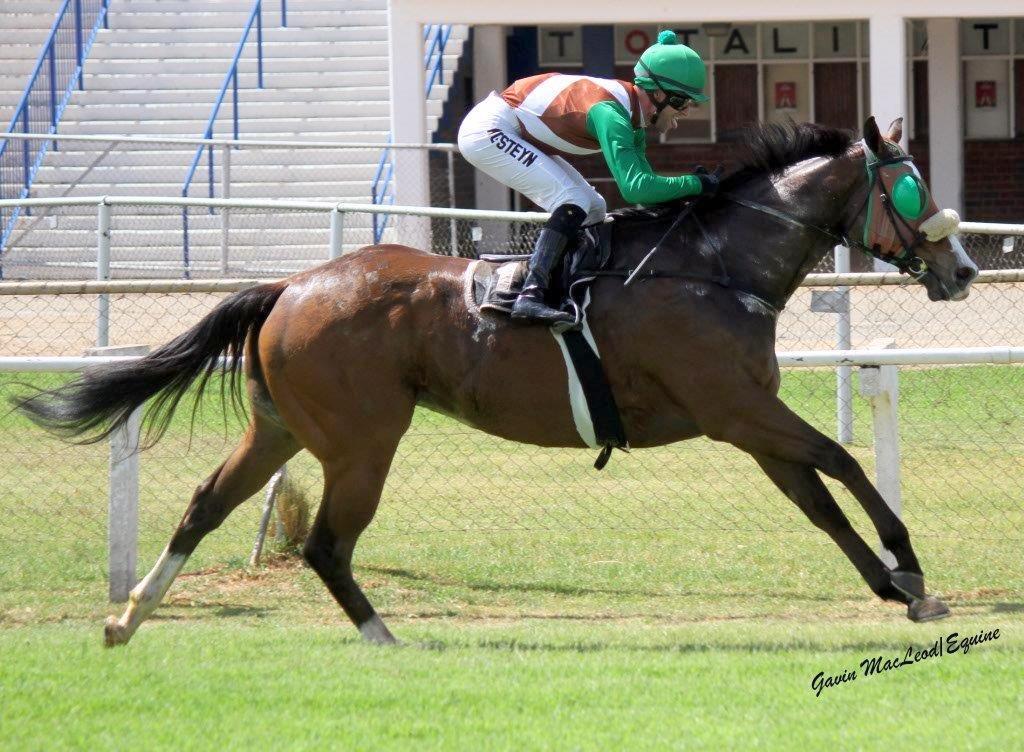
Photograph by Gavin Macleod.

POLITICAL CORRECTNESS GONE MAD

The Centaurian calls for “a ban on twaddle”

So, the Cat appeared through the kitchen door cat flap and seemed to have something in its mouth – ah yes, a mouse, a live mouse! It wandered off to the corner of the kitchen and dropped the mouse on the floor but covered its escape routes.

Have you ever heard a mouse squeal in terror of its life? Not nice – it was a torturous episode where the cat pawed the mouse over and over again, claws out. The little rodent was terrified. After about five minutes of all this, the cat pounced and bit the mouse in half and gobbled it up. Yummy. There are eleven million such cruel beasts in the UK alone, 600 million worldwide.

Just then my nephew walked in with rod in hand – plus three trout – supper was secure. We chatted about the sport and I learnt that there were almost three million anglers in the UK – one in every three households – it seems they all go out with their rods and a tin of fresh live maggots. They find a nice spot by the riverbank and prepare for their fishing session. First they impale an unsuspecting live maggot on a barbed hook and are always pleased to see it wriggle in agony as it’s dropped into the river as such writhing is likely to attract a hungry fish.

In due course the baiting exercise is repeated – several times – more impaled maggots –  until eventually there is a tug on the line – a fish is caught – the barbed hook has entered the mouth of the fish and the tug has seen the hook pierce the fish’s lip. The catch then begins to battle in agony and fear until eventually it is landed, the hook is roughly removed (without anaesthetic) and the fish popped into the keep net – until the catch is complete and it is supper time. All the fish are then taken from the keep net and die on the way home.

Then there are racehorses. Five hundred kilos of majesty, grace, power and muscle. They can be bought for a few hundred pounds Sterling to a few million pounds, and sent to trainers to be pampered and prepared for the sport of kings. No expense is spared in caring for these equine athletes – the best stables, the best food, the best health care, the kindest grooms and no natural or unnatural predators – except maybe a spider.

In terms of love and attention, horses must be the best loved and cared for animal after your own children (but not always your own children!) – and way ahead of cats and dogs.

Then it comes to race day, the horses are fit and well and trained to the tee. Down to the start, gates fly open, the runners are away and speed into the finishing straight – it’s a close run thing. Jockeys get the flat bottomed whips out and apply them no more than seven times in a flat race to the rump of their mounts.

I don’t know if the public is generally aware that horses live in fields and prairies as natural habitats, like sheep and cattle. People might not also know that as basically wild animals tamed by humans, they tend not to wear woolly jumpers in winter or pyjamas at bedtime – nor are they provided with hot water bottles and central heating.

That is because they are animals, they have thick leather hides and a covering of coarse hair. They are not humans.

And in the finishing straight, horses need to be urged to give of their best and travel in a straight line when doing so. The modern day whip produces no welts on a horse’s arse and yet provides enough stimulation to trigger the natural “flight” response in the animal’s psyche, and enough help to steer the beast in the right direction. Some horses are natural competitors and need little encouragement, others are less so. It is up to the jockey to assess his needs in a race.

I have no problem whatsoever with the current rules associated with whip use and would strongly oppose any steps to further restrict or ban them. And to all the limp wrists who campaign otherwise, I would counsel that they get their priorities right and direct their efforts to the far bigger issue which is the banning of fishing, and maybe the fitting of mouth grills on cats which can only be removed at formal feeding times – and by so doing protect all those poor rodents and birds from hideous torture and torment.

Time also for a ban on twaddle.

LOVE TO BLUFF TAKES JACARANDA FREE

Love To Bluff, trained by Bridget Stidolph and with Keanen Steyn in the irons, defied top weight and won the 1200m Zimoco Jacaranda Free Handicap at Borrowdale Park on Saturday.

Wantage, second, was receiving 7 kgs from his stable companion.

By Judpot (USA) and bred by Millstream Farm, the three-year-old gelding has now won four of his seven starts.

Love To Bluff is owned by Messrs R S Dyer, S N Buchan, N Evans, M K Chant, G de Jong, A Dixon, R Morgan, R Sherwood, G Carter, and Mrs P Lewis. Congratulations everyone.

The Stidolph yard won four of the seven races on the card.

Photograph by Zimbabwe Equine News.

Where would you prefer to race?

THE CENTAURIAN is a columnist covering international racing on a Facebook page. However this time Borrowdale Park gets one of the few bouquets he has been handing out recently.


Followers of my column on Facebook (@zimracing) will know that I hold American horse racing in very low esteem and they may even believe my views are ill founded and too emotive. These are fair assumptions but are wholly wrong. It is opportune to illustrate my feelings now as we have just seen the running of two well publicised race meetings – the Breeders Cup at Santa Anita and the Melbourne Cup at Flemington in Australia.


The meetings could not have been more different.

We could talk about many aspects of the race meeting – the publicity and hype for both was high, the quality of horses was just OK for both meetings, jockey quality was very good – Frankie did both meetings for example, the purses were excellent – circa US$ 6 million for both top races and then there was the attendance levels.

I think attendance might say much about the product. Interestingly both meetings attracted about the same number of racegoers – about 41,000 on each day – but this is down on past peaks at both meetings of 60,000 – saying something about the image of racing. This aspect is the subject of another article – where I will be castigating the media and the limp-wrists!
But it’s the courses I want to talk about – they could not be more different. Flemington is a big, sweeping turf, galloping track with a circumference of over 2,100 metres and a straight of over three furlongs – this is proper racing. One fairly tight turn at about the 2000 metre post – but nowhere near a hazard being so far from home when horses are not flat out.

The Melbourne Cup was won by Vow And Declare ridden by Craig Williams for Aussie trainer Danny O’Brien at 10/1 – Master of Reality with Frankie aboard ran a close second before being demoted to fourth by the stewards. Interestingly for me, this horse is by Frankel who never raced beyond 2000 metres – but look at its dam – L’Ancresse – a Darshaan mare – this is where the stamina must have come from to see out two miles (3200 metres)

Can you believe that after such a race the first 23 home were covered by just 10 lengths – Rostropovich spoilt the stat by cracking a pelvic bone and basically pulled up. The first nine home were covered by just two lengths – again this is proper, heart pumping, exciting racing of the highest order – and I don’t often say such things about Australian sport – but this was a terrific race.

Now consider Santa Anita. To me it would be better if they raced whippets there – it’s a toy by comparison to Flemington or Borrowdale Park. The dirt track is just 1600 in circumference and the straight is about a furlong and a half – or 350 metres. Madness. The grass track is actually inside the dirt track and has commensurately diminutive distances – what nonsense is this?

The track is a tight one with two sharp bends at either end of 400 metre straights with horses travelling flat out whilst running on the second bend before the short finishing straight. The lateral forces on these horse’s legs must be severe and injury inducing – and clearly are.

Vino Rosso beat MacKinzie because the latter could not stay the 2000 metre Classic distance – and jockey, Irad Ortiz put four lengths between to two – so there were no “also rans” within two lengths of the winner and only two within 10 lengths of the winner!

Despite the size of the purse there were only 11 runners competing. (Mongolian Groom broke down and had to be put down)It was pretty clear as the horses turned into the straight there were only two horses going to contest the finish and that was about as exciting as watching Jeremy Corbyn trying to make a point in Parliament. This is dire, dire racing indeed and is typical of what can be seen in America.

For me, it can’t be about anything other than the tracks because the bloodlines, the jockeys, the trainers, the purses are fine – it’s these pitiful, dangerous, badly thought out tracks of dirt – I haven’t researched them all yet I can say they are pretty much the same. Rubbish.

In my view, American horse racing does not have what it takes to survive, let alone prosper in its current format – and certainly not when the element of gambling is added back in against all else on the internet. Finally, with the issues of Lasix, whip use and horse fatalities, I guess the nails are already in the coffin lid of US racing – it won’t take much to close that lid, hammer in the nails and bury the whole thing – and what a tragedy that would be over the next few decades.

The answer has to be about revamping the concept completely – the wheel doesn’t need reinventing – the examples are there in abundance – across Europe, Southern Africa and the Antipodes. Make American racing great again Donald!

See what I mean about tracks in the pics included here.

SERIOUSLY DERANGED – OR DREAMING ABOUT THE FUTURE?

From time to time it is probably kind to give one’s detractors further evidence that one is seriously deranged.

October in Zimbabwe has been described as suicide month and this year the heat has exceeded expectations. Main topics of conversation, in some cases the only topics, cover rising prices and lack of water and electricity. If you are into racing add in the shortage of horses, rising costs and so forth and so on.

So, I was thinking this would be a good time to set up an impregnable trust/account and start raising money towards a sanctuary for needy ex-racehorses. I am only sorry we didn’t do this years ago when the industry was flourishing but better late than never.

This year horse racing has attracted serious flak, worldwide, and it is easy to understand why people with no insider knowledge would like it to be banned. Racing needs heroes not horror stories and there have been plenty of those emanating most recently from the United States and Australia. The media has been blamed for circulating these tales, but that is what the media is meant to do. Animal welfare is important and when cruelty in various forms exists it should be exposed.

Most racehorse owners care about their horses and if they can’t provide for them after racing, they make sure they are suitably re-homed or move on to other disciplines. However, horses change hands, the original owners lose track, and that’s where many of the horror stories begin.

Fortunately, in Zimbabwe, we are not big enough to have instituted claiming races. Many former racehorses are absorbed into dressage, show-jumping etc, and there are pleasant places where horses can be retired if owners can afford the fees. But let’s not kid ourselves…there is always a dark side if we had the guts to investigate…and I am as guilty as anyone when it comes to behaving like an ostrich.

Good things can start from small beginnings. I wouldn’t dare suggest a 1% levy on all racing stakes at this stage of our game, but what about a small voluntary donation when your horse earns something? (I can almost hear howls of anguish reverberating across the land).

In some other countries government and related institutions contribute to similar causes (one day we might get there); someone, someday, might donate or share land; perhaps a person with undeserving relatives will leave a legacy for horses.

Let’s make a start. Please, financial geniuses out there, put your thinking caps on.

I know life in Zimbabwe is depressing at the moment but just imagine what you could do with some unexpected millions – that will cheer you up – and while you’re waiting to win the Lotto, or something, please consider what you could do, right now, in a small way, to help.

Photograph: Retired Racehorses Elite Racing Club

SATURDAY’S BORROWDALE PARK RACE MEETING IS NOT GOING AHEAD


THE commendable, but difficult, decision to hold off on this meeting was made by the MTC stewards today (Monday). They have put the horses first which is the right thing to do.

The decision was reached because of unsuitable going. Soaring temperatures in Harare have undermined attempts to irrigate and improve the going. The penetrometer reading at the October 20 meeting was 15 – firm to hard – and conditions during this week are unlikely to change for the better.

At this stage it is not clear whether this race meeting has been cancelled or postponed. More details later.

White Winter Easily

Top weight White Winter (Greyling) finished three lengths clear Enter The Dragon (D. Habib) in the 1100m MR Handicap at Borrowdale on Sunday. Supa Memories was third, followed by Midnight Rambler.

Saddled by Assistant Trainer Vanessa Birketoft, White Winter was the first of three winners from the Gokhan Terzi yard. The five-year-old mare by Warm White Night, bred by Zandvlei Stud, has now won three races and is owned by Genghiz Goksel.

Other winners from the yard were newcomer to Borrowdale, It Takes Two, owned by Dave Rosser and Mr Goksel, and Hillah The Hun, owned by Genghiz and Mike Eaton. Hennie Greyling was aboard both horses.

It Takes Two, by Twice Over (GB), won the 1200m MR 65 Handicap, and Hillah The Hun scored in the 1600m MR 55 Handicap for fillies and mares. This daughter of Visionaire (USA) (below) is now a four-time winner.

Congratulations to the winning connections.

Photographs by Zimbabwe Equine News

GIRL POWER AND GIN FIXED IT

Lily Blue, owned by Robyn MacLeod and the Gin ‘Ill Fix It Syndicate (Nominee Kirsty Stidolph), won the Breeders Fillies Mile (L) at Borrowdale Park on Sunday. Wes Marwing was in the irons.

By Black Minnaloushe (USA) out of a Kitalpha (USA) mare, Lily Blue has now won three and was bred by Geoff Armitage. She is trained by Bridget Stidolph.

Wijdaan, a first-timer at Borrowdale, reared up at the start and dislodged jockey Hennie Greyling, thereafter bolted, and was caught, examined by the Course Veterinarian and passed fit to race. She still managed to come second.

Prescott and Gimmethegreenlight finished third and fourth.
Congratulations everyone. Ash Dixon did the presentation.

Photographs by Gavin MacLeod and Zimbabwe Equine News.